
Dollar Tree NNN Properties for Sale — $1.25 Everything Triple Net Lease Investments
Dollar Tree NNN properties offer passive income investors the powerful combination of BBB- investment-grade credit (S&P stable outlook, $30.6B revenue Fortune 500 #101), recession-resistant $1.25 price point (everything $1.25 creating value perception, inflation-proof model), 8,000+ US locations (all 50 states, suburban + rural penetration), 15-25 year absolute NNN leases (tenant pays all expenses, predictable cash flow), and strong unit economics ($2.5M average sales per store, highest among dollar stores) creating exceptional conditions for long-term triple net lease cash flow in America’s fixed-price discount retailer with sustained consumer demand.
American Net Lease specializes in Dollar Tree NNN investments across suburban corridors, strip centers, and freestanding locations nationwide. Browse current listings or call 239.236.2626 to discuss exclusive Dollar Tree opportunities.
Why Invest in Dollar Tree NNN Properties?
Dollar Tree combines investment-grade BBB- credit with recession-resistant $1.25 fixed pricing—”everything’s a dollar twenty-five” creates consumer value perception, minimal price sensitivity (customers don’t comparison shop at $1.25), treasure hunt shopping experience (impulse purchases drive traffic), 8,000+ locations provide geographic diversification, 15-25 year NNN leases offer predictable cash flow, and strongest dollar store unit economics ($2.5M sales/store vs Family Dollar $1.2M, Dollar General $1.8M) ensuring tenant profitability making Dollar Tree NNN properties ideal for conservative investors seeking investment-grade tenant with value retail resilience.
1. BBB- Investment-Grade Credit — $30.6B Fortune 500 Strength
Dollar Tree maintains BBB- investment-grade credit rating from S&P (stable outlook, lowest investment-grade tier but institutional quality), backed by $30.6B annual revenue (Fortune 500 #101, includes Dollar Tree + Family Dollar banners), 16,000+ total stores (8,000+ Dollar Tree, 8,000+ Family Dollar creating scale), public company transparency (NASDAQ: DLTR, quarterly earnings), and consistent profitability ($2.1B operating income, 7% margins) providing lender confidence and institutional investor appeal for NNN financing.
Dollar Tree financial metrics (2024):
- Combined revenue: $30.6B (Dollar Tree $16B, Family Dollar $14.6B)
- Operating income: $2.1B (7% margins, profitable)
- Store count: 16,000+ total (8,000+ Dollar Tree banner stores)
- Market cap: $25B+ (publicly traded NASDAQ: DLTR)
- Credit rating: BBB- investment-grade (S&P stable outlook)
Why BBB- matters for NNN investors:
- Lender-friendly: 70-75% LTV financing typical (investment-grade threshold)
- Institutional buyers: REITs require investment-grade (exit liquidity)
- Stable outlook: S&P affirmed BBB- (no downgrade risk near-term)
- Public company: Financial transparency (10-K/10-Q SEC filings)
Dollar Tree vs Family Dollar credit (same parent):
- Dollar Tree banner: $16B revenue, $2.5M sales/store (stronger)
- Family Dollar banner: $14.6B revenue, $1.2M sales/store (weaker, turnaround)
- Both guaranteed by: Dollar Tree, Inc. corporate (BBB- applies to both)
- Investor preference: Dollar Tree banner properties preferred (stronger fundamentals)
2. $1.25 Fixed Price Point — Recession-Resistant Value Perception
Dollar Tree’s “everything’s a dollar twenty-five” model creates recession-resistant advantages: fixed pricing eliminates price sensitivity (customers know every item $1.25, no comparison shopping), value perception (consumers perceive deals regardless of actual value), impulse purchasing (low $1.25 threshold encourages unplanned purchases), treasure hunt experience (rotating merchandise drives repeat visits), and inflation resistance (Dollar Tree maintains $1.25 despite input cost inflation by reducing package sizes) creating sustained traffic and sales regardless of economic conditions.
$1.25 pricing advantages:
- No price checking: Customers don’t comparison shop (everything same price)
- Impulse purchases: $1.25 threshold low enough for spontaneous buying
- Basket building: Customers add extra items freely (“it’s only $1.25 each”)
- Value perception: Consumers feel they’re getting deals (even if not always true)
Evolution from $1.00 to $1.25 (2021-2022):
- Historical: Everything $1.00 (1986-2021, 35 years fixed)
- Inflation pressure: COVID-19 supply chain, labor costs, freight
- 2021 decision: Raised to $1.25 (25% increase, necessary to maintain margins)
- Customer response: Minimal pushback (customers accepted, traffic sustained)
How Dollar Tree maintains $1.25:
- Package downsizing: Smaller packages (10 oz chips vs 12 oz, customers accept)
- Product curation: Eliminate items that can’t profitably sell $1.25
- Sourcing: Direct imports, private label, closeouts (margin optimization)
- Volume: Scale purchasing power (16,000 stores = leverage with suppliers)
Recession-resistant proof:
- 2008-2009 recession: Dollar stores +8-12% sales (trade-down traffic)
- 2020 COVID-19: Dollar Tree +8% sales (essential retail, stimulus)
- 2023 inflation: Dollar Tree +5% same-store sales (consumers seek value)
3. 8,000+ Locations — Suburban + Strip Center Dominance
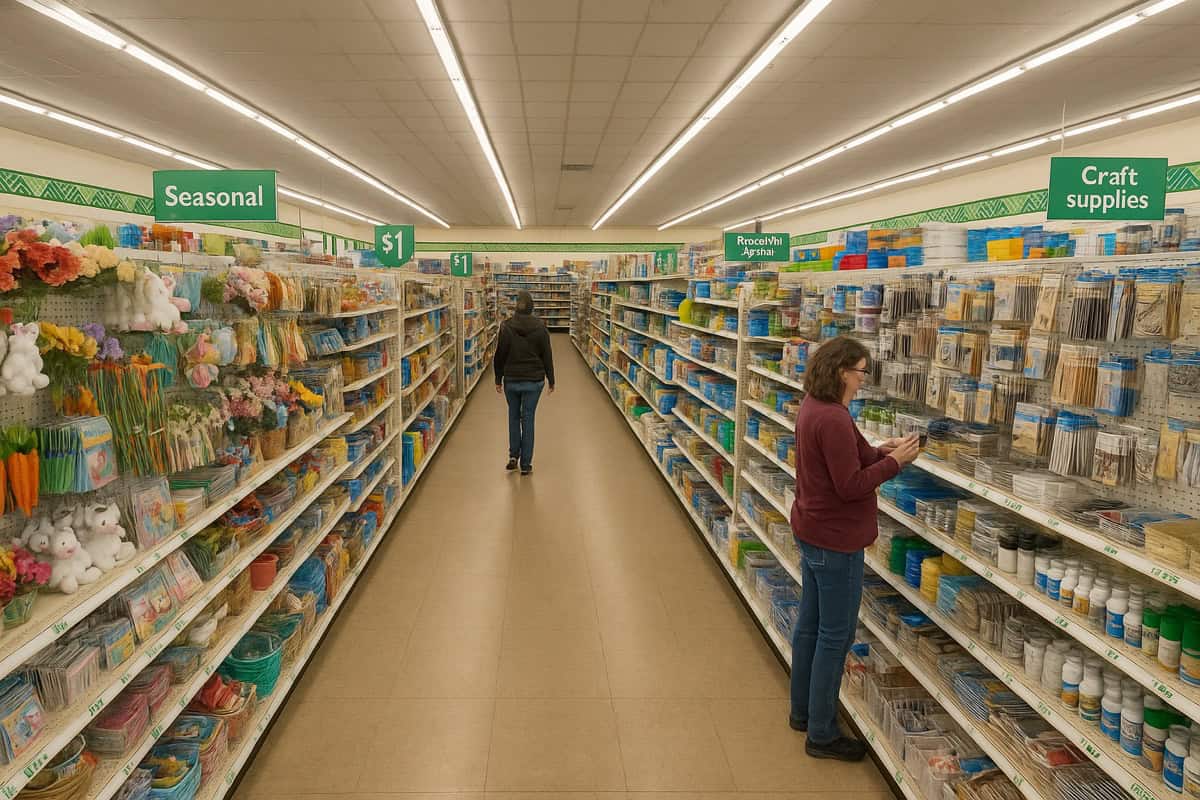
Dollar Tree operates 8,000+ US stores with suburban focus (70% suburban vs Family Dollar 60% urban), strip center inline (85% in shopping centers vs 15% freestanding), middle-income demographics (median income $50K-$75K vs Family Dollar $35K-$50K lower-income), and convenient locations (high-traffic corridors, grocery-anchored centers) creating NNN investment opportunities in stable suburban markets with predictable tenant performance and institutional investor appeal.
Dollar Tree store footprint:
- Total US stores: 8,000+ (all 50 states)
- Store format: 8,000-10,000 sq ft (larger than Family Dollar 7,500 sq ft)
- Location type: 85% strip center inline, 15% freestanding
- Demographics: Middle-income suburban (broader than Family Dollar low-income)
Strip center inline advantages (85% of Dollar Tree stores):
- Traffic generators: Grocery anchors drive Dollar Tree traffic (halo effect)
- Lower cap rates: 6.5-7.0% (vs 7.5-8.0% freestanding, landlord risk lower)
- Shared expenses: CAM charges predictable (parking, landscaping)
- Co-tenancy: Dollar Tree benefits from center foot traffic
Geographic concentration:
- Texas: 800+ Dollar Tree stores (largest state, suburban growth)
- California: 600+ stores (suburban Los Angeles, Bay Area, San Diego)
- Florida: 600+ stores (suburban Tampa, Orlando, Jacksonville)
- Ohio: 300+ stores (Midwest concentration, suburban metros)
- North Carolina: 300+ stores (Charlotte, Raleigh, Greensboro suburbs)
Middle-income target (vs low-income Family Dollar):
- Median income: $50K-$75K household (vs Family Dollar $35K-$50K)
- Suburban moms: Primary customer (kids, household needs)
- Supplemental shopping: Dollar Tree + grocery store same trip (convenient)
- Discretionary: More discretionary income than Family Dollar customers
4. 15-25 Year Absolute NNN Leases — Corporate Guarantee
Dollar Tree typically signs 15-25 year initial terms (20 years most common) with absolute NNN lease structure (tenant pays property taxes, insurance, maintenance, roof, HVAC, parking lot), 1.5-2% annual rent escalations (10% every 5 years alternatives), renewal options (2-3 five-year renewals, 35-45 year total potential), and Dollar Tree, Inc. corporate guarantee (parent company $30.6B revenue backing, not franchise) providing NNN investors with predictable mailbox money backed by investment-grade BBB- credit.
Standard Dollar Tree lease terms:
- Initial term: 15-25 years (20 years typical new construction)
- Lease type: Absolute NNN (tenant pays ALL expenses)
- Rent escalations: 1.5-2% annually OR 10% every 5 years
- Renewal options: 2-3 five-year renewals (35-45 year total)
- Corporate guarantee: Dollar Tree, Inc. (BBB- investment-grade)
Absolute NNN structure:
- Property taxes: Tenant pays 100%
- Insurance: Tenant maintains all coverage
- Maintenance: Tenant pays parking, landscaping, HVAC, roof
- Structural: Tenant responsible (true absolute NNN)
- Landlord: Collects rent only (zero operating expenses)
Rent escalation examples:
- Annual 2%: $100K base → $149K year 20 (49% increase)
- 10% every 5 years: $100K → $146K year 20 (46% increase)
5. Strongest Dollar Store Unit Economics — $2.5M Average Sales/Store
Dollar Tree achieves $2.5M average sales per store (highest among dollar stores, 2x Family Dollar $1.2M, higher than Dollar General $1.8M), driven by higher traffic (6,000-8,000 weekly transactions vs Dollar General 4,000-5,000), larger basket size ($15-$20 average vs Family Dollar $10), middle-income customers (more discretionary spending), and impulse purchasing ($1.25 threshold encourages adding extra items) creating superior tenant profitability supporting lease renewals and rent payments.
Dollar store sales comparison:
| Tenant | Avg Sales/Store | Avg Basket | Weekly Traffic |
|---|---|---|---|
| Dollar Tree | $2.5M | $15-$20 | 6,000-8,000 |
| Dollar General | $1.8M | $12-$15 | 4,000-5,000 |
| Family Dollar | $1.2M | $10 | 3,000-4,000 |
Why Dollar Tree outperforms:
- $1.25 fixed price: Impulse purchases (customers add items freely)
- Middle-income: More discretionary spending than Family Dollar low-income
- Suburban locations: Higher traffic than rural Dollar General
- Treasure hunt: Rotating merchandise drives repeat visits
Product categories (what Dollar Tree sells):
- Consumables: 45% (food, snacks, beverages, household, health/beauty)
- Variety: 45% (party supplies, seasonal, toys, crafts, home decor)
- Frozen/refrigerated: 10% (expanding category, added 2018+)
Profitability metrics:
- Gross margins: 35-37% (lower than Family Dollar 30%, better sourcing)
- Operating margins: 10-11% (healthy, best among dollar stores)
- Sales/sq ft: $250-$300 (efficient, high productivity)
6. 6.5-7.5% Cap Rates — Premium to Family Dollar, Discount to Pharmacy
Dollar Tree NNN properties typically trade at 6.5-7.5% cap rates (depending on location, lease term, strip center vs freestanding), providing lower yields than Family Dollar (7.5-8.0%, reflecting Family Dollar turnaround risk) but higher yields than pharmacy (5.5-6.5% Walgreens/CVS, investment-grade comparison) creating balanced risk-reward profile for investors seeking investment-grade BBB- tenant with superior dollar store fundamentals.
Cap rate ranges:
- Strip center inline: 6.5-7.0% (co-tenancy, lower risk)
- Freestanding: 7.0-7.5% (single-tenant risk premium)
- Strong markets: 6.5-7.0% (major metros, high traffic)
- Secondary markets: 7.0-7.5% (smaller metros, moderate demos)
Comparison to similar tenants:
| Tenant | Cap Rate | Credit | Sales/Store | Store Closures |
|---|---|---|---|---|
| Dollar Tree | 6.5-7.5% | BBB- | $2.5M | Minimal |
| Family Dollar | 7.5-8.0% | BBB- (same parent) | $1.2M | 500-1,000 |
| Dollar General | 7.0-7.5% | BBB | $1.8M | Minimal |
| Walgreens | 5.5-6.5% | BBB | $4M+ | 450/year |
Why Dollar Tree trades lower cap than Family Dollar:
- Stronger sales: $2.5M vs $1.2M Family Dollar (2x stronger)
- No closures: Dollar Tree minimal vs Family Dollar 500-1,000 closing
- Better demographics: Middle-income suburban vs Family Dollar low-income urban
- Brand strength: Dollar Tree stronger brand recognition
Why Dollar Tree trades higher cap than pharmacy:
- Sector perception: Dollar stores viewed riskier than pharmacy essential
- Store size: 8,000-10,000 sq ft less flexible than 12,000-15,000 sq ft pharmacy
- Competition: Dollar stores saturated (3 major chains) vs pharmacy duopoly (Walgreens/CVS)
7. Family Dollar Acquisition (2015) — Parent Company Scale
Dollar Tree acquired Family Dollar for $9B in 2015 creating combined enterprise with $30.6B revenue (Fortune 500 #101), 16,000+ total stores (8,000+ Dollar Tree, 8,000+ Family Dollar), purchasing power ($30.6B combined buying volume), and distribution synergies ($300M annual cost savings) benefiting Dollar Tree NNN investors through parent company financial strength, institutional scale, and investment-grade BBB- credit backing both banners.
2015 merger significance:
- Before: Dollar Tree $8B standalone, Family Dollar $9B standalone
- After: Combined $30.6B entity (Fortune 500 #101, institutional scale)
- Credit impact: Family Dollar upgraded to BBB- (was BB non-investment grade)
- NNN investors: Both banners now guaranteed by Dollar Tree corporate
Synergies realized:
- Purchasing: $30.6B combined volume = supplier leverage
- Distribution: Shared warehouses, freight optimization ($300M savings)
- Real estate: Portfolio optimization (close overlapping stores)
- Technology: Unified systems (inventory, POS, supply chain)
Family Dollar turnaround impact on Dollar Tree:
- Distraction: 2015-2020 Family Dollar integration consumed management focus
- Store closures: 500-1,000 Family Dollar underperformers closing (right-sizing)
- H2 format: 1,200+ Family Dollar conversions (adding Dollar Tree products)
- Dollar Tree focus: Core Dollar Tree banner remained strong throughout
Dollar Tree Credit Strength & Financial Performance
Dollar Tree’s BBB- investment-grade credit is supported by $16B Dollar Tree banner revenue (stronger segment vs Family Dollar $14.6B weaker), $2.5M average sales per store (best-in-class unit economics), minimal store closures (<50/year vs Family Dollar 500-1,000), and $1.25 fixed pricing model (recession-resistant, sustained demand) making Dollar Tree banner properties preferred over Family Dollar banner for conservative NNN investors despite same parent company and BBB- credit rating.
Dollar Tree banner performance (2024):
- Revenue: $16B (growing +5-8% annually)
- Store count: 8,000+ (expanding 100-200/year)
- Avg sales/store: $2.5M (highest dollar store)
- Same-store sales: +5-8% (healthy growth)
- Operating margins: 10-11% (best dollar store profitability)
Family Dollar banner performance (2024):
- Revenue: $14.6B (flat to declining)
- Store count: 8,000+ (closing 500-1,000 underperformers)
- Avg sales/store: $1.2M (lowest dollar store)
- Same-store sales: -2% to +2% (struggling)
- Operating margins: 5% (weak, turnaround mode)
Why Dollar Tree banner superior for NNN:
- Stronger sales: $2.5M vs $1.2M Family Dollar (profitability confidence)
- No closures: Dollar Tree expanding vs Family Dollar contracting
- Better locations: Suburban middle-income vs urban low-income
- Lower risk: Dollar Tree properties safer bet (same BBB- credit, better fundamentals)
Types of Dollar Tree NNN Properties
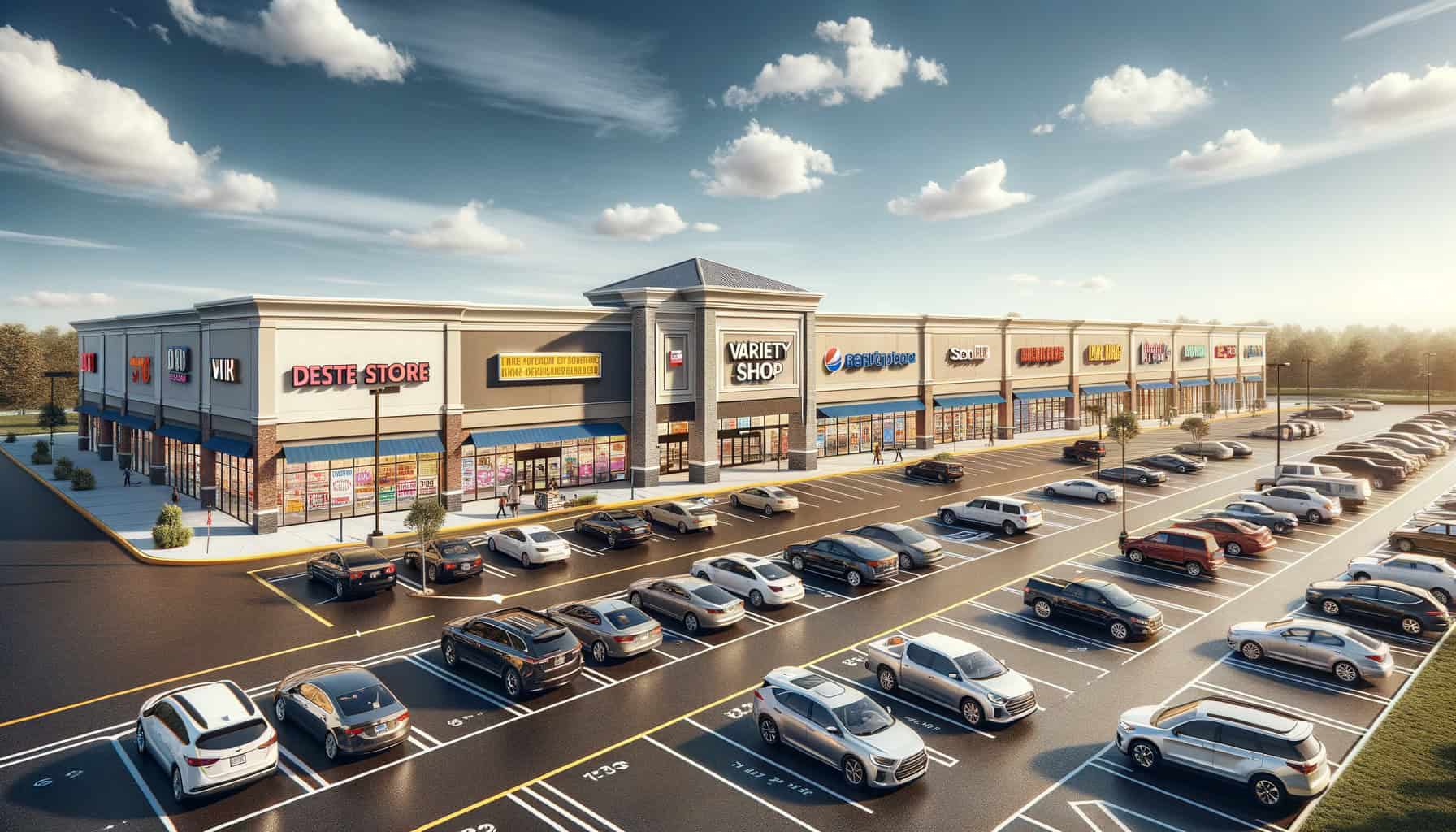
Dollar Tree NNN properties primarily come as strip center inline (85% of stores) with some freestanding (15%) offering investors different risk-reward profiles, cap rates, and management requirements.
1. Strip Center Inline (85% of Dollar Tree Stores)
Typical specifications:
- Building size: 8,000-10,000 sq ft (inline space within shopping center)
- Location: Grocery-anchored centers, suburban strip centers
- Anchor tenants: Kroger, Publix, Walmart Neighborhood Market (traffic drivers)
- Parking: Shared with center (50-200+ spaces)
Investment characteristics:
- Lower cap rates: 6.5-7.0% (co-tenancy reduces risk)
- CAM charges: Dollar Tree pays pro-rata common area maintenance
- Traffic benefits: Grocery anchor drives Dollar Tree traffic (halo effect)
- Easier management: Shared expenses with other tenants
Cap rates: 6.5-7.0%
Typical prices: $1.2M-$2.2M (Dollar Tree space only)
2. Freestanding Single-Tenant (15% of Dollar Tree Stores)
Typical specifications:
- Building size: 8,000-10,000 sq ft (standalone)
- Lot size: 25,000-40,000 sq ft (0.6-0.9 acres)
- Location: High-visibility corners, arterial corridors
- Parking: 30-40 spaces (dedicated)
Investment characteristics:
- Higher cap rates: 7.0-7.5% (single-tenant risk)
- True NNN: Absolute NNN (zero landlord expenses)
- Full control: Landlord owns entire property
- Redevelopment: Land value protected (rebuild if vacant)
Cap rates: 7.0-7.5%
Typical prices: $1.5M-$2.5M (building + land)
Key Markets for Dollar Tree NNN Investment
1. Texas — 800+ Stores
Dollar Tree Texas advantages:
- 800+ stores: Largest state footprint
- Suburban growth: Dallas, Houston, Austin, San Antonio expansion
- Zero income tax: Texas 0% (NNN investor benefit)
- Middle-income: Suburban demographics ($55K-$75K median)
Cap rates: 6.5-7.5%
2. California — 600+ Stores
Dollar Tree California:
- 600+ stores: Second-largest state
- Suburban concentration: Los Angeles, Orange County, San Diego, Bay Area
- Middle-income: $60K-$80K median income (Dollar Tree target)
Cap rates: 6.0-7.0% (California premium pricing)
3. Florida — 600+ Stores
Dollar Tree Florida:
- 600+ stores: Suburban Tampa, Orlando, Jacksonville, Fort Myers
- Zero income tax: Florida 0% (investor magnet)
- Retiree + family: Diverse demographics
Cap rates: 6.5-7.5%
How to Evaluate Dollar Tree NNN Properties
1. Verify Dollar Tree Corporate Guarantee
Critical check:
- Guarantor name: “Dollar Tree, Inc.” (parent company BBB-)
- NOT: “Dollar Tree Stores, Inc.” (subsidiary, verify parent backing)
- Lease date: All leases should have Dollar Tree Inc. guarantee
- Attorney review: Confirm guarantee structure
2. Strip Center vs Freestanding Decision
Strip center inline (85% inventory, lower risk):
- Pros: Lower cap 6.5-7.0%, co-tenancy traffic, easier management
- Cons: CAM charges, co-tenancy clauses, less control
Freestanding (15% inventory, higher yield):
- Pros: Higher cap 7.0-7.5%, absolute NNN, full control, land value
- Cons: Single-tenant risk, vacancy = 100% dark
3. Underwrite Based on Location Type
Strip center underwriting:
- Accept: 6.5-7.0% cap (co-tenancy justifies lower yield)
- Verify: Strong anchor (Kroger, Publix = good, weak anchor = avoid)
- Check: Co-tenancy clause (if anchor leaves, does Dollar Tree reduce rent?)
Freestanding underwriting:
- Demand: 7.0-7.5% cap (single-tenant risk requires premium)
- Verify: High traffic count (30,000+ vehicles/day arterial)
- Check: Zoning flexibility (if Dollar Tree leaves, redevelopment options)
Dollar Tree NNN Property Case Study
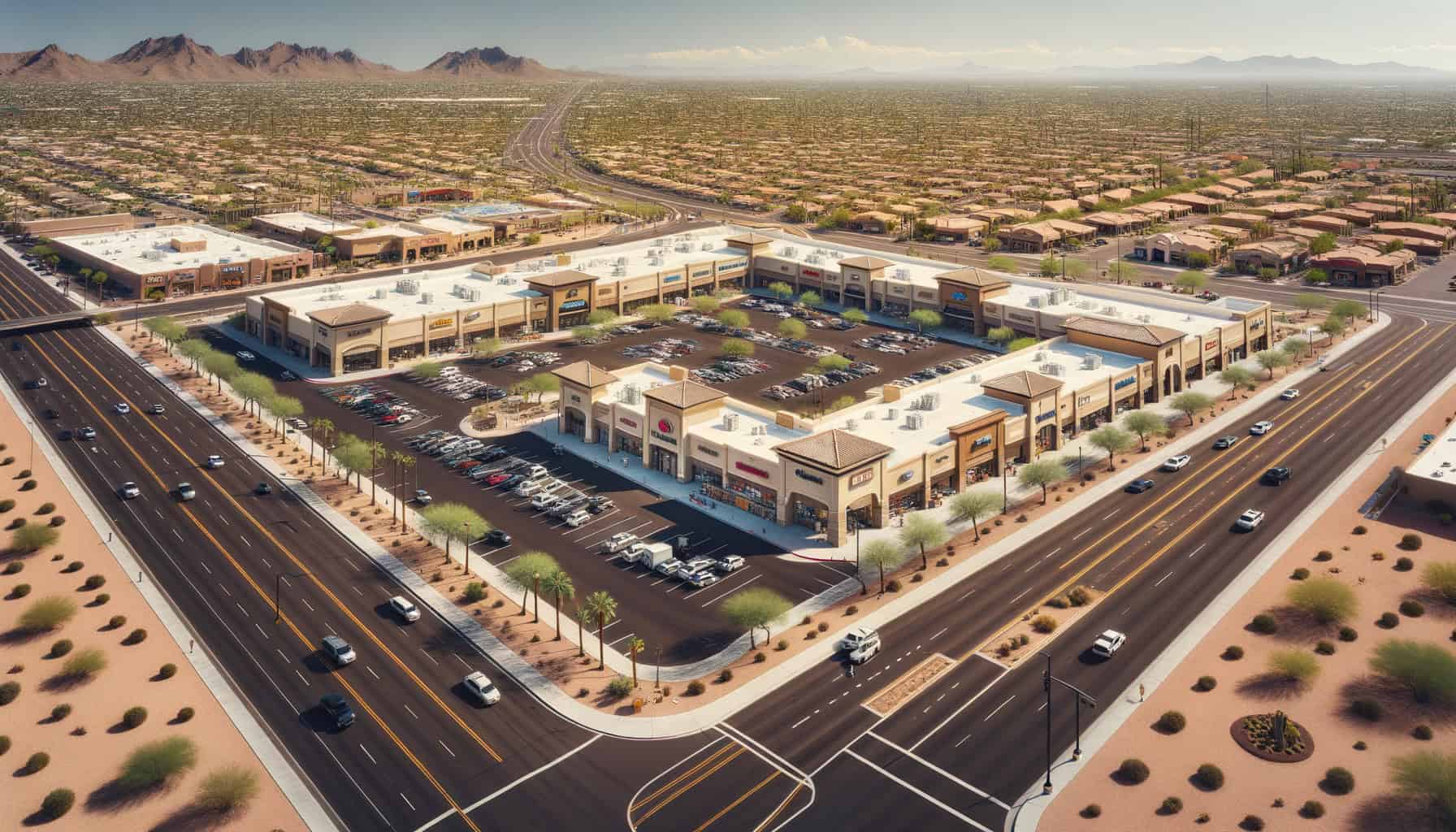
Dollar Tree — Phoenix, AZ (Strip Center Inline)
Purchase price: $1,600,000
Cap rate: 6.75%
Annual NOI: $108,000
Lease term: 18 years remaining
Tenant: Dollar Tree, Inc. (corporate guarantee, BBB- investment-grade)
Why this property works:
1. Strong Phoenix suburban location:
- Strip center: Grocery-anchored (Fry’s Food, Kroger banner)
- Demographics: $65,000 median income (middle-class suburban)
- Traffic count: 40,000 vehicles/day (high-visibility arterial)
- Population growth: Phoenix +15% 2010-2020 (Sunbelt migration)
2. Dollar Tree banner strength (NOT Family Dollar):
- $2.5M store sales: Above Dollar Tree average (healthy profitability)
- No closures: Dollar Tree banner expanding (not contracting)
- Middle-income focus: Phoenix suburbs = Dollar Tree target demo
- BBB- credit: Dollar Tree Inc. corporate guarantee verified
3. Strip center co-tenancy benefits:
- Grocery anchor: Fry’s Food drives traffic (Dollar Tree benefits)
- Complementary tenants: Nail salon, pizza, cell phone store
- Shared expenses: Parking lot, landscaping CAM charges predictable
- Lower cap: 6.75% justified by co-tenancy (vs 7.5% freestanding)
4. Lease structure:
- 18 years remaining: Long-term stability (expires 2042)
- Absolute NNN: Tenant pays property taxes, insurance, CAM, all maintenance
- 2% annual escalations: $108K → $154K year 18 (+43%)
- Two 5-year renewals: 28-year total potential
Investor outcome:
- 6.75% cap rate: $108,000 annual NOI on $1.6M
- Monthly rent: $9,000
- Rent growth: +43% over 18 years (2% annual compound)
- Dollar Tree BBB- credit: Investment-grade lender-friendly
- Exit strategy: Sell after 12-15 years, buyer inherits remaining lease
Frequently Asked Questions (FAQs)
Is Dollar Tree financially stable for 15-25 year lease?
Yes—Dollar Tree is financially stable. BBB- investment-grade credit (S&P), $30.6B Fortune 500 #101, expanding 100-200 stores annually (not contracting), $2.5M average sales per store (strongest dollar store unit economics), and minimal closures (<50/year vs Family Dollar 500-1,000) demonstrate tenant strength. Critical distinction: Dollar Tree banner (strong, $16B revenue, expanding) vs Family Dollar banner (weak, $14.6B revenue, contracting). NNN investors should strongly prefer Dollar Tree banner properties over Family Dollar despite same parent company BBB- credit—Dollar Tree banner has superior fundamentals and lower closure risk.
Dollar Tree vs Dollar General vs Family Dollar — which is best?
Dollar General (BBB credit, 19,000 stores, $1.8M sales/store):
- Best for: Highest credit rating (BBB vs BBB-), most stores (scale)
- Cap rates: 7.0-7.5%
Dollar Tree (BBB- credit, 8,000 stores, $2.5M sales/store):
- Best for: Strongest unit economics ($2.5M sales), middle-income suburban
- Cap rates: 6.5-7.5%
Family Dollar (BBB- same parent, 8,000 stores, $1.2M sales/store):
- Best for: Highest yields (7.5-8.0%), value opportunity (if careful underwriting)
- Caution: Store closures 500-1,000, turnaround risk
Recommendation: Dollar Tree offers best balance—same BBB- credit as Family Dollar but stronger fundamentals (2x sales per store, no closures, better demographics). Dollar General has slightly better credit (BBB vs BBB-) but Dollar Tree superior unit economics compensate.
What cap rates should I expect for Dollar Tree NNN properties?
Dollar Tree cap rates: 6.5-7.5% (strip center 6.5-7.0%, freestanding 7.0-7.5%)
Why lower cap than Family Dollar (7.5-8.0%):
- Stronger sales: $2.5M vs $1.2M Family Dollar
- No closures: Expanding vs Family Dollar contracting
- Better demographics: Middle-income suburban (safer)
Why higher cap than pharmacy (5.5-6.5%):
- Sector perception: Dollar stores riskier than pharmacy
- Competition: 3 dollar chains vs 2 pharmacy chains
Fair value: 6.5-7.5% cap rates appropriate for Dollar Tree BBB- credit + strong unit economics.
Can I use 1031 exchange to buy Dollar Tree NNN properties?
Yes. Dollar Tree NNN properties qualify for 1031 exchange (like-kind commercial real estate), offer BBB- investment-grade credit (lender-friendly 70-75% LTV), absolute NNN structure (passive income), and 6.5-7.5% cap rates (balanced yield) making them ideal replacement properties for investors selling appreciated assets seeking tax deferral with institutional-quality tenant.
1031 advantages:
- Defer capital gains: Federal + state tax deferral
- Passive income: Absolute NNN = zero management
- Investment-grade: BBB- credit enables financing
- Suburban locations: Middle-income stable demographics
Ready to Invest in Dollar Tree NNN Properties?
American Net Lease specializes in Dollar Tree triple net lease investments across suburban strip centers and freestanding locations nationwide. Our $1.25 fixed-price retail expertise, Dollar Tree unit economics analysis, and investment-grade credit focus create exceptional opportunities for NNN investors seeking stable cash flow with institutional backing.
Browse our current inventory of Dollar Tree NNN properties or call 239.236.2626 to discuss exclusive opportunities.
View Dollar Tree NNN Properties for Sale | Download Our Dollar Store NNN Guide | Schedule a Consultation
Invest in America’s $1.25 Leader. Investment-grade credit. Strongest dollar store fundamentals. Build wealth with Dollar Tree NNN properties.